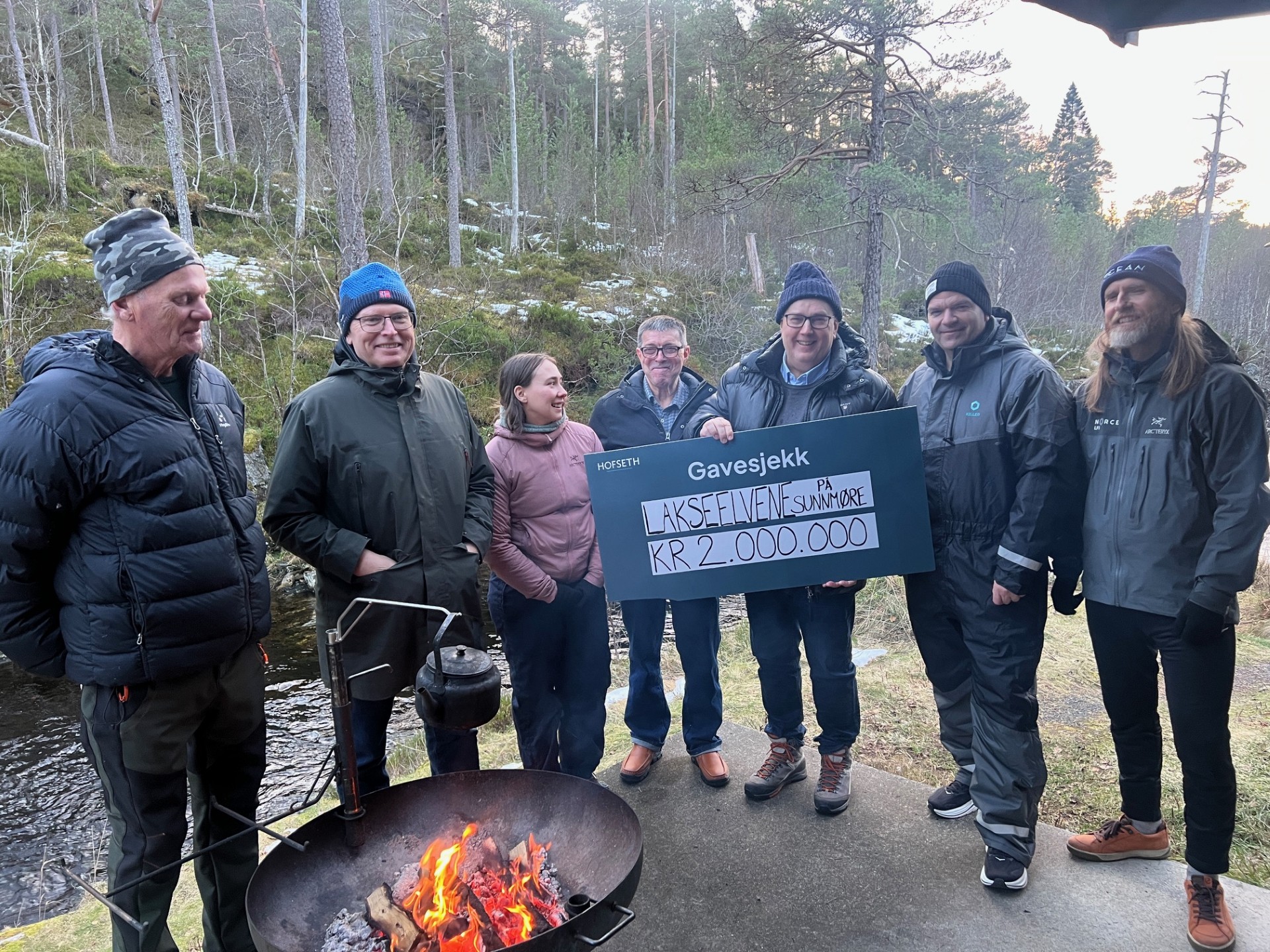
Wild Atlantic salmon in Sunnmøre face major challenges. That much we know. What we have long lacked is sufficient knowledge of what actually works, and which measures have the greatest effect. This is precisely why the collaboration that began in 2020 through the core project “More Salmon and Sea Trout in Sunnmøre” is so important.
Since its launch in 2020, Hofseth has supported the project with more than NOK 10 million. This funding has enabled a number of subsidiary projects and triggered additional public funding, together providing a far better understanding of conditions both in rivers and at sea. The work includes fish population surveys, detailed mapping of rivers to identify physical interventions and impacts, and research into various factors limiting wild salmon and sea trout populations. Based on these findings, many targeted measures have been implemented.
The most important outcome of the core project has been gaining a comprehensive overview of the condition of the rivers. NORCE (Norwegian Research Centre), which has led and carried out the work, has produced a number of reports that have received international attention and provide new, valuable knowledge. This knowledge enables us to prioritize the right measures.
Roger Hofseth is clear about the responsibility of the aquaculture industry to safeguard wild salmon. Wild salmon is the ancestor of farmed salmon, and that comes with a responsibility to protect it. At the same time, he points out that aquaculture is often blamed for the entire negative development, while inreality the picture is far more complex. Changes in global conditions, salmon lice, hydropower development, predation, and conditions in the open ocean all play a role. For both Hofseth and Lakseelvene på Sunnmøre, it is essential to put the facts on the table.
Scientific independence is crucial
One of the greatest strengths of the collaboration is its scientific independence. Researcher Marius Kambestad at NORCE emphasizes that both the researchers and Lakseelvene på Sunnmøre are completely free to draw their own conclusions. The funding places no constraints on what can or cannot be said. At the same time, the support helps finance measures that actually deliver positive results.
The division of roles is clear. Hofseth is responsible for reducing the impact of salmon lice, while the researchers and Lakseelvene på Sunnmøre are responsible for establishing facts and proposing measures — both in rivers and at sea.

Salmon lice – a shared goal
Salmon lice represent the single greatest challenge for both wild salmon and the aquaculture industry. Therefore, we share a common goal: to reduce them. Hofseth has already achieved promising results through the use of submerged cages and is now in the process of building closed-containment systems that will be put into operation in Storfjorden. Work on new measures is ongoing.
Lakseelvenepå Sunnmøre continue to push for faster implementation of closed systems and other measures that reduce challenges related to salmon lice.
Knowledge delivers results
Members of Lakseelvene på Sunnmøre have differing views on what most strongly affects wild salmon. Nevertheless, we agree on one thing: the work being done now is making a difference. We have restored rivers, improved spawning and nursery habitats, increased knowledge levels, and implemented targeted measures. We have seen that several of these measures work. Most importantly, we now actually know the condition of our rivers— and what is required to facilitate growth in wild salmon populations.
Without knowledge and cooperation, we would have stood completely still. We no longer do.
